GLP-1 medications changed the game. Semaglutide, tirzepatide -- these drugs work. People are losing significant weight for the first time after decades of failed diets. The appetite suppression is real. The results on the scale are dramatic. And millions of people are walking around lighter than they have been in years.
But there is a problem nobody wants to talk about.
When you lose weight on a GLP-1 medication without resistance training, a significant portion of what you lose is not fat. It is muscle. Research consistently shows that 25-40% of total weight lost on GLP-1 medications alone is lean mass -- muscle tissue and, in some cases, bone density. On a 40-pound weight loss, that could mean 10 to 16 pounds of muscle gone. Not fat. Muscle.
You weigh less. You might even look thinner. But you are weaker. Your metabolism is slower because you have less muscle to drive it. Your body composition -- the ratio of muscle to fat on your frame -- may not have improved as much as the scale suggests. And when you eventually come off the medication or reduce the dose, the weight that comes back is predominantly fat, not muscle. Sound familiar? It is the exact same trap as crash dieting, just with a different mechanism.
This is why training is not optional on a GLP-1 medication. It is the single most important thing you can do to ensure that the weight you lose is actually fat and not the muscle that keeps your metabolism running, your body functional, and your long-term health intact.
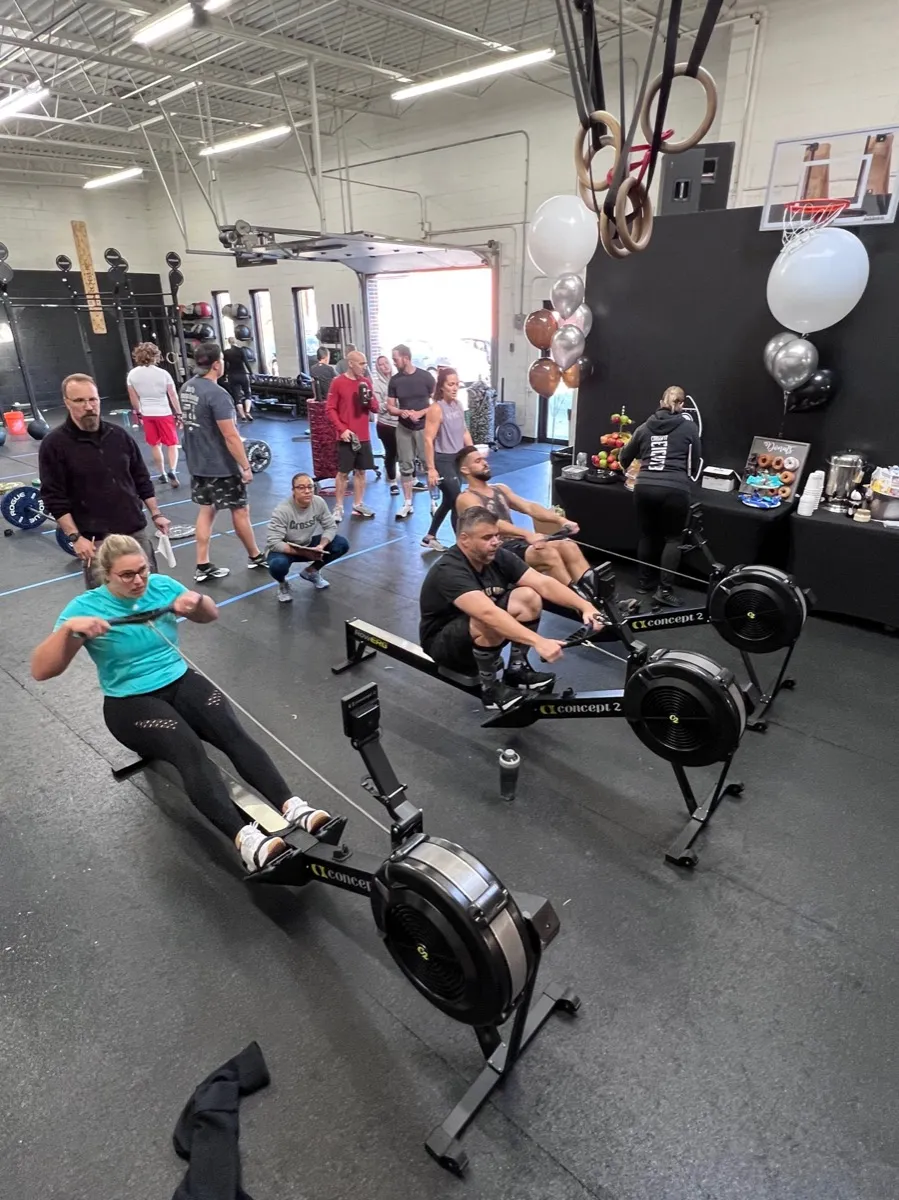
The Muscle Loss Problem Nobody Talks About
Let's be specific about what is happening inside your body on a GLP-1 medication without exercise.
GLP-1 agonists work primarily by reducing appetite and slowing gastric emptying. You eat less because you are not hungry. Your caloric intake drops significantly -- often by 500-1,000 calories per day or more. This creates a caloric deficit, which drives weight loss.
But your body does not care about your aesthetic goals. When you are in a sustained caloric deficit, your body looks for energy sources to burn. Fat is one. Muscle is another. Without a strong signal to preserve muscle -- namely, resistance training -- your body will catabolize muscle tissue alongside fat to meet its energy needs. It is metabolically easier for your body to break down muscle than to mobilize fat stores in many cases.
The result is what researchers call "disproportionate lean mass loss." You lose weight, but a disturbing percentage of that weight is the tissue you actually want to keep. This is not hypothetical. The clinical trials showed it. The STEP trials for semaglutide documented significant lean mass loss in participants who were not exercising. The SURMOUNT trials for tirzepatide showed similar patterns.
This matters because muscle is not just cosmetic. Muscle is your metabolic engine. It determines your resting metabolic rate -- how many calories you burn doing nothing. It protects your joints. It maintains bone density. It keeps you independent and functional as you age. Losing muscle while losing fat is a net negative trade for your long-term health, even if the scale number looks great.
Why CrossFit Is the Ideal Pairing for GLP-1
Not all exercise is equal when it comes to preserving muscle on a GLP-1 medication. Walking is great for general health, but it does not provide the resistance stimulus needed to signal your body to keep its muscle tissue. Spinning and running burn calories, but they do not build or maintain muscle. Yoga improves mobility and reduces stress, but it is not a sufficient load-bearing stimulus.
What your body needs is resistance training. Heavy-ish things being lifted, pushed, pulled, and carried. Squats, deadlifts, presses, rows, cleans, carries. The type of training that tells your muscles: "You are being used. Do not break me down for fuel."
CrossFit delivers this in every single session. Every class includes a strength or skill component -- barbell work, dumbbell movements, gymnastics -- followed by metabolic conditioning. You are getting the resistance stimulus that preserves muscle AND the cardiovascular conditioning that supports fat loss. Both in the same hour. Both coached, so you do not have to program it yourself.
This dual-stimulus approach is exactly what the research supports for optimal body recomposition on GLP-1 medications. You want to lose fat and keep muscle. Resistance training is the mechanism that makes that possible. And CrossFit is one of the most efficient delivery systems for consistent, varied, progressively loaded resistance training.
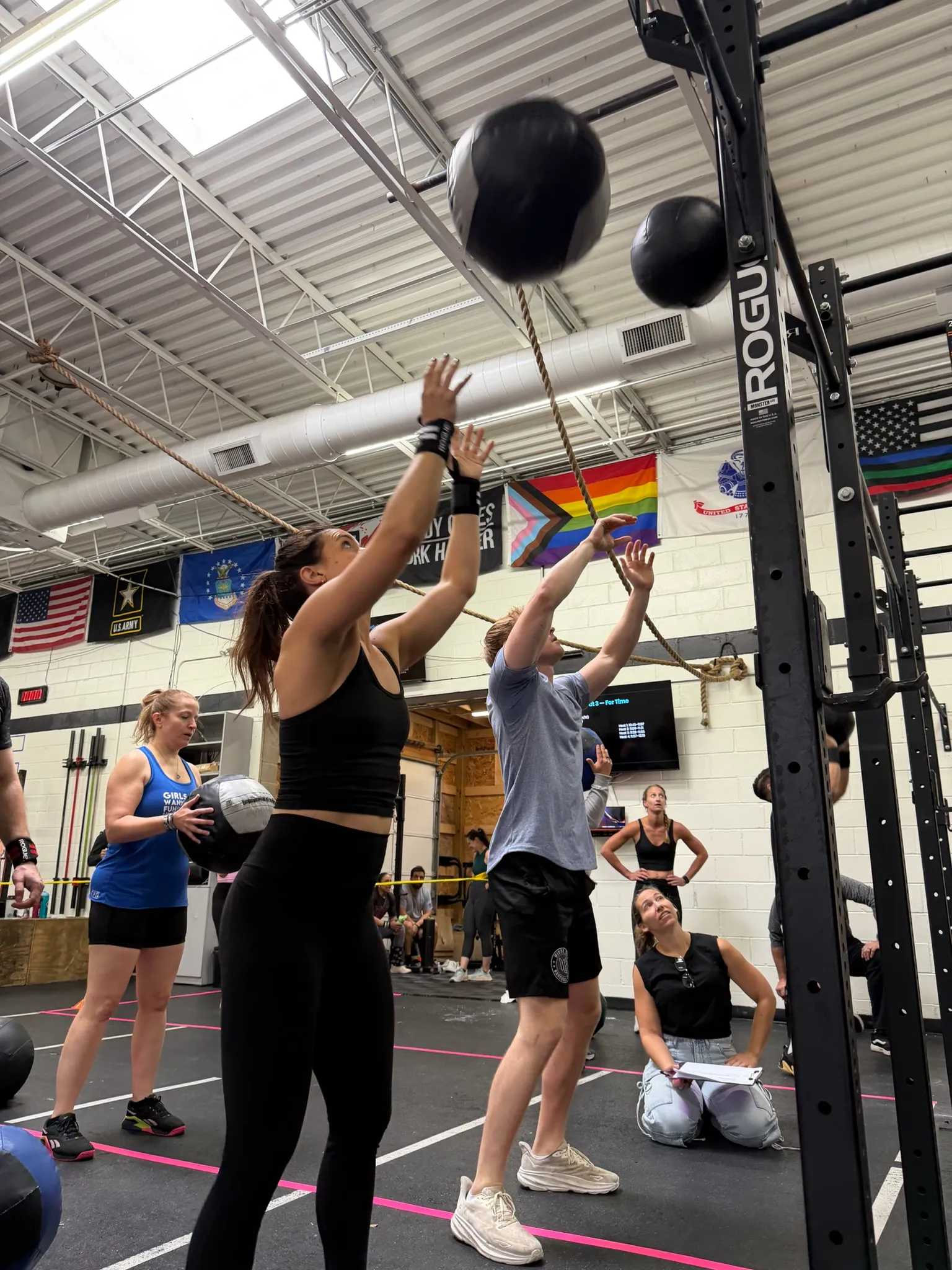
Real Talk: Can You Do CrossFit on Semaglutide?
Yes. But let's be honest about what the adjustment period looks like.
The first few weeks. When you start a GLP-1 medication or titrate to a higher dose, you may experience reduced appetite (obviously), occasional nausea, and lower energy levels. This is normal and temporary. It does not mean you cannot train. It means you might need to scale back intensity for a week or two while your body adjusts. Lighter weights, shorter workouts, more rest between sets. Show up. Move. Do not try to PR.
Nausea management. Training with nausea is not fun, but it is manageable with some adjustments. Eat a small, easily digestible meal 60-90 minutes before training -- not a full meal, but something with protein and carbs that will not sit heavy. Avoid training immediately after your injection day if nausea is an issue. Stay hydrated. And communicate with your coach -- they can adjust your workout on the fly if you are not feeling great.
Energy and fueling. The biggest practical challenge is eating enough to support training when your appetite is suppressed. GLP-1 medications make you not hungry. But your body still needs fuel to train hard and recover. Prioritize protein -- aim for at least 0.7-1 gram per pound of body weight daily. This is the single most important nutritional intervention for preserving muscle on a GLP-1. Even if you do not feel like eating, get the protein in. Shakes, high-protein snacks, whatever it takes.
After the adjustment period. Once your body adapts to the medication (usually 4-8 weeks), most people report that their training normalizes. Energy returns. Nausea subsides. And many athletes actually find that their performance improves as excess body fat decreases and their relative strength increases. You are moving the same weight at a lighter bodyweight -- that is a net performance gain.
The Moonshot Protocol: GLP-1 + DEXA + Blood Work + Training
Here is what makes Moonshot different from every other option out there.
Most people on GLP-1 medications get their prescription from a telehealth provider or their primary care doctor. They get weighed. They get a new script. Nobody is checking what the weight loss actually consists of. Nobody is tracking whether they are losing muscle or fat. Nobody is monitoring their hormones, their metabolic health, or their inflammatory markers. The scale goes down and everyone celebrates.
At Moonshot, the whole picture connects.
Moonshot Medical and Performance manages the clinical side of GLP-1 protocols. That includes proper patient evaluation, dosing, and ongoing monitoring. But it also includes DEXA scans -- the gold standard for body composition tracking. A DEXA scan shows you exactly how much of your weight loss is fat versus lean mass, broken down by body region. It is the only way to know for certain whether your training is doing its job.
Combine that with metabolic blood panels that track fasting glucose, insulin, HbA1c, and inflammatory markers, and you have a complete data picture. You can see the medication working on the metabolic level. You can see the training preserving muscle on the DEXA. You can see your blood markers improving in real time.
And then you walk next door to Moonshot CrossFit and train with a coach who knows your situation, scales appropriately, and programs the resistance training your body needs to maintain its muscle mass through the weight loss process. The DEXA data informs the training. The training informs the clinical protocol. Everything works together instead of in silos.
This is not a weight loss clinic that hands you a pill and says good luck. This is an integrated system designed to produce real body recomposition -- less fat, more muscle, better metabolic health, better function -- not just a smaller number on a scale.

What to Expect Month by Month
Here is a realistic timeline for someone starting a GLP-1 medication alongside CrossFit training:
Month 1: Adjustment
Appetite drops noticeably. You may experience some nausea during the first 1-2 weeks. Energy levels may dip. Scale starts moving. Training intensity might be 70-80% of your normal capacity. Focus on showing up, hitting the strength work even if lighter than usual, and getting your protein intake locked in. Baseline DEXA scan establishes your starting body composition.
Months 2-3: Adaptation
Your body adjusts to the medication. Nausea subsides. Energy normalizes. Training intensity returns to normal or close to it. Scale continues to drop. Clothes fit differently. Strength may hold steady or even improve as you lighten up. You are losing primarily fat because the training is sending a strong muscle-preservation signal. This is where the magic starts.
Months 3-6: Transformation
Visible body recomposition. Your DEXA scan at this point should show significant fat loss with minimal lean mass loss -- a dramatically different result than GLP-1 without training. Relative strength improves. Conditioning improves as you carry less dead weight. People notice. Metabolic markers improve on blood work. This is what sustainable, medically supported body recomposition looks like.
6 Months and Beyond: The New Baseline
You have built a body that is leaner, stronger, and metabolically healthier. Whether you continue the medication, reduce the dose, or come off entirely, the muscle you preserved is your insurance policy. It keeps your metabolism elevated, your body functional, and your results sustainable. People who trained through their GLP-1 protocol maintain their results at dramatically higher rates than those who relied on medication alone.
The Uncomfortable Truth
GLP-1 medications are a powerful tool. But a tool without a strategy is just a shortcut -- and shortcuts in health and fitness always come with a cost. The cost of GLP-1 without exercise is muscle loss. And muscle loss has downstream consequences that will catch up with you: slower metabolism, reduced strength, compromised bone density, increased frailty risk as you age, and a higher probability of regaining weight when you stop the medication.
The people who get the best long-term results from GLP-1 medications are the ones who pair them with consistent resistance training, adequate protein intake, and clinical monitoring. They do not just lose weight. They recompose their bodies -- trading fat for maintained or gained muscle, improving metabolic health markers, and building a physical foundation that lasts.
That is the whole point. Not to be skinny. To be strong, lean, functional, and metabolically healthy. The scale is a piece of the puzzle, but it is not the picture.
Frequently Asked Questions
Can you do CrossFit while taking semaglutide or tirzepatide?
Yes. CrossFit is one of the best training modalities to pair with GLP-1 medications because it combines strength training and metabolic conditioning in every session. Most people can train normally, though some modifications may be needed during dose adjustments -- particularly around nausea management and energy levels. Starting with 3 sessions per week and scaling up as your body adapts is a sensible approach.
How much muscle do you lose on GLP-1 medications without exercise?
Research shows that 25-40% of total weight lost on GLP-1 medications alone is lean mass (muscle and bone), not fat. On a 40-pound weight loss, that could mean 10-16 pounds of muscle lost. Resistance training is the most effective intervention to reduce this ratio -- people who combine GLP-1 medications with strength training lose predominantly fat while preserving or even gaining muscle mass.
What is the best exercise to do while on Ozempic or Wegovy?
Resistance training is the single most important form of exercise while on GLP-1 medications. Lifting weights, squatting, deadlifting, pressing -- anything that loads your muscles and signals your body to preserve lean tissue. CrossFit is particularly effective because every session includes both strength work and conditioning, giving you the best of both worlds in a coached, structured environment.
Will GLP-1 medications affect my CrossFit performance?
During the initial dose titration period (first 4-8 weeks), some people experience reduced appetite, occasional nausea, and lower energy that can affect training intensity. This is temporary. Once your body adjusts, most athletes report that performance returns to normal or improves as excess body fat decreases and relative strength increases.
How do you track body composition changes on GLP-1 medications?
A DEXA scan is the gold standard. It shows exactly how much of your weight loss is fat versus lean mass, broken down by body region. The scale alone is misleading -- you need to know the ratio. Scanning every 8-12 weeks while on GLP-1 gives you hard data on whether your training is effectively preserving muscle during the weight loss process.