You already know you should work out. You don't need another article telling you exercise is good for you. What you probably need is a way to actually keep doing it when things get hectic -- when work picks up, the kids have a million activities, you're running on five hours of sleep, and the last thing you feel like doing is going to the gym.
Here's what most people get wrong: they think consistency comes from motivation. It doesn't. Motivation is a feeling. It shows up when it wants to and disappears when things get hard. If your gym habit depends on feeling motivated, you'll go for a few weeks and then fall off the second life throws a curveball.
Consistency comes from systems. Things you set up once that make showing up the default, not the exception. Here's what actually works.

1. Pick a Schedule and Treat It Like a Meeting
You don't skip a work meeting because you're "not feeling it." You don't bail on a dentist appointment because the couch is comfortable. Your gym time needs that same status in your calendar.
Pick your days. Pick your times. Put them on the calendar. Then stop negotiating with yourself about whether today is a good day to go. The decision is already made. Tuesday at 5:30 AM? That's where you'll be. Thursday at 4:30 PM? Already on the books.
This works even better with class-based training like CrossFit. The class starts at a set time whether you're there or not. There's no "I'll go at 6... actually 7... actually maybe tomorrow." The schedule is fixed. You just show up when the clock says it's time.
At Moonshot, we run classes throughout the day -- early morning, mid-morning, and evening. Most members find their slot and stick with it. That regularity becomes automatic over time. You stop thinking about it the same way you stop thinking about brushing your teeth. It's just what you do at that time.
2. Lower the Bar on Bad Days
This one is counterintuitive, but it's probably the most important tip on this list.
On the days you don't feel like training, your brain gives you two options: go hard or don't go at all. That's a trap. Because "go hard" sounds miserable when you're tired, and "don't go at all" is very easy to justify. So you skip.
Here's the better play: go and do 50%. Go and scale everything down. Go and just move for an hour. A mediocre workout you actually do beats a perfect workout that stays in your head.
Some of our members' best long-term progress came not from their hardest days, but from the days they almost didn't come in. Because those days kept the streak alive. They reinforced the identity: "I'm someone who goes to the gym." Once that identity is solid, consistency takes care of itself.
Your coaches understand this. Nobody at Moonshot is going to look at you sideways if you scale a workout or take it easier than usual. We'd rather see you in the building at 70% than at home at 0%.
3. Remove Decisions
Every decision you have to make is an opportunity to talk yourself out of going. So eliminate as many decisions as possible.
- Pack your bag the night before. Shoes, clothes, water bottle, all ready to grab. If you train in the morning, set it by the door. If you go after work, put it in your car before you leave the house.
- Go at the same time every day. When the time varies, you waste mental energy figuring out "when" instead of just going.
- Don't check how you feel before deciding. If it's on the calendar, go. Feelings are unreliable data. The habit is the system. Trust the system.
- Have your post-workout routine dialed. Protein shake in the fridge, clean clothes laid out, next meal prepped. When everything after the gym is smooth, the whole thing feels easier.
This is the principle of removing friction. Every barrier between you and the gym -- no matter how small -- is a chance for your brain to say "not today." Reduce the barriers to near zero, and "not today" stops being the default answer.
4. Use Accountability That Actually Works
Telling yourself you'll be accountable to yourself is like being your own boss with no performance reviews. It sounds great in theory. In practice, you let yourself off the hook constantly.
Real accountability comes from other people. Specifically, people who will notice if you don't show up.
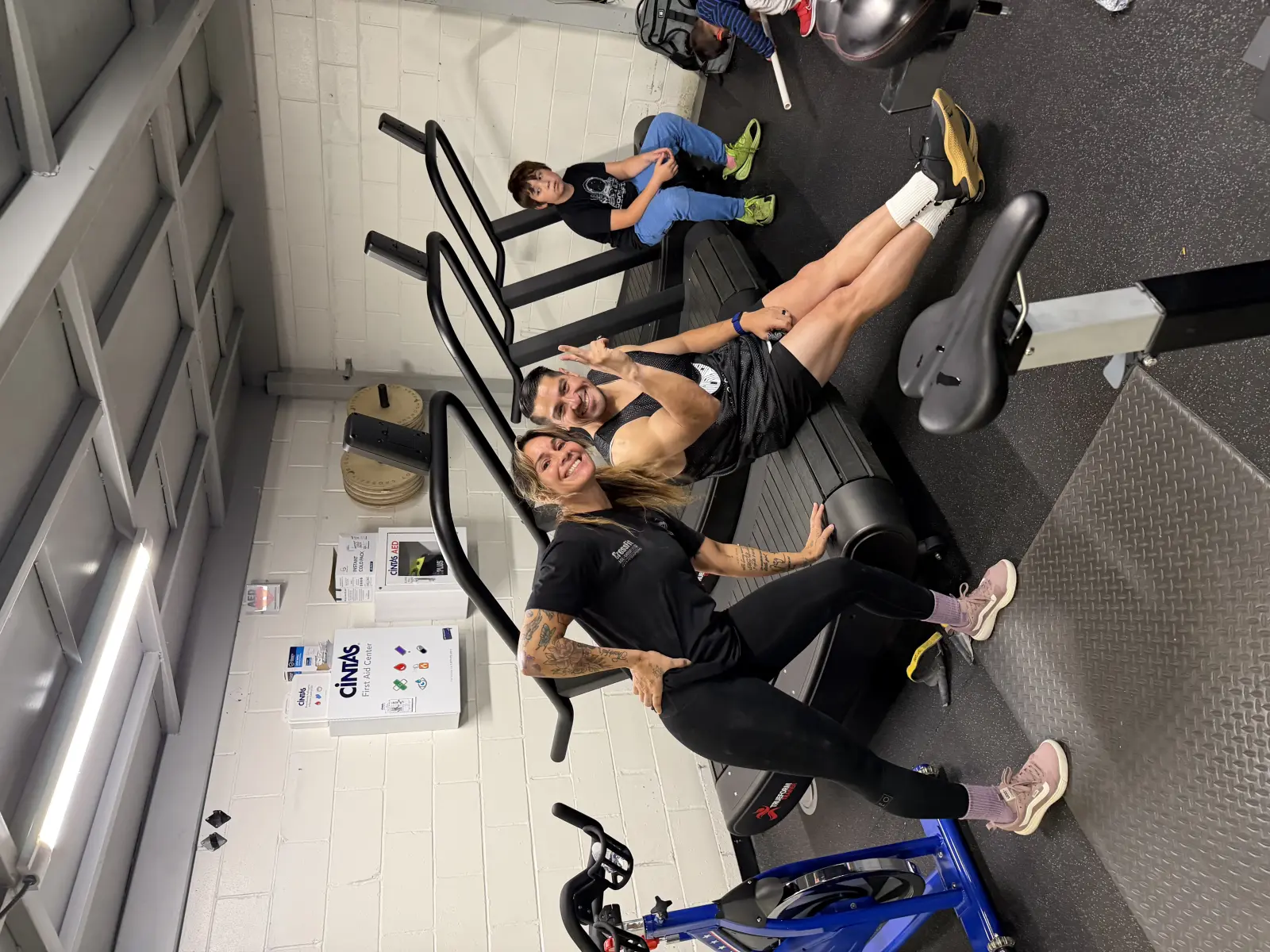
This is one of the biggest advantages of training in a community. At Moonshot, your coach knows your schedule. Your class regulars know your face. If you miss a few days, someone's going to text you or ask about it when you come back. That's not pressure -- it's proof that people give a damn.
A workout buddy works too, but it has a failure mode: if your buddy cancels, you cancel. A class community is more resilient. Even if one person is out, you've still got a roomful of people expecting you to be there.
Some members tell us that knowing people are waiting for them is the single biggest reason they don't skip. It's not about the workout. It's about not wanting to let their people down. And honestly, that's a perfectly good reason to show up.
5. Track Something Simple
You don't need a spreadsheet with twelve columns. You need one thing you can look at that tells you whether you're on track.
For most people, that's just the number of days per week they showed up. That's it. Not weight lifted, not calories burned, not body fat percentage. Just: did I go three times this week? Yes or no.
A simple streak tracker works. A calendar on the fridge with X's on the days you trained works. The Wodify app that Moonshot uses tracks your attendance automatically, so you can look back and see exactly how consistent you've been.
The point isn't obsessive data collection. The point is making your consistency visible so you can protect it. When you see a streak of three weeks with four sessions each, you don't want to break it. When you see a gap, you know it's time to get back on track before one missed week turns into three.
6. Accept That Life Will Interrupt -- and Plan for It
You're going to miss days. Vacations happen. Sick kids happen. Work travel happens. A week where everything falls apart and the gym is the last thing on your mind -- that happens too.
The difference between people who stay consistent long-term and people who fall off isn't that the consistent people never miss. It's that they come back. Quickly. Without drama. Without the "well, I already missed two weeks so I might as well start over in January" spiral.
One missed week isn't a failure. It's just a week. Come back. Do the next class. Pick up where you left off. Your coaches aren't keeping score. Your body doesn't reset to zero because you took a break. The gym is always there, and so is the community.
The most consistent members we have aren't the ones who never miss. They're the ones who always come back.
The Real Secret
None of this is complicated. Pack your bag. Pick a time. Show up even when you don't feel like it. Train with people who know your name. Track the basics. Come back when life knocks you off track.
The secret to gym consistency isn't some hack or trick. It's designing your life so that going is easier than not going. And the single biggest cheat code for that is being part of a gym community that pulls you in instead of a gym you have to push yourself to visit.
That's the difference between a place with equipment and a place with people. Equipment doesn't care if you show up. People do.

One more thing worth mentioning: if you're showing up consistently but still not seeing the results you expected, the issue might not be discipline -- it might be data. Fatigue, slow recovery, stubborn body composition, low energy -- these can all have underlying causes that no amount of consistency will fix on its own. A comprehensive blood panel through Moonshot Medical can reveal whether something like thyroid function, hormone levels, or metabolic markers are working against you. Sometimes the best next step isn't training harder -- it's knowing what's actually going on inside your body.