"Can CrossFit help you lose weight?" is one of the most common questions people search for. And it makes sense. You're looking for something that works. You've probably tried other things that didn't.
But here's the honest answer: it's the wrong question.
The better question is: can CrossFit change my body composition? Because the scale is a terrible measure of what's actually happening inside your body. People who start CrossFit often gain muscle and lose fat at the same time. The scale might not move at all. The mirror will. Your clothes will. Your energy, your sleep, your confidence -- all of it shifts. But the number on the scale? It might stay exactly the same for weeks while your body is quietly transforming.
If you're chasing a number on a scale, you're measuring the wrong thing. If you're chasing a body that's stronger, leaner, and more capable -- keep reading.
Why Most Weight Loss Approaches Fail
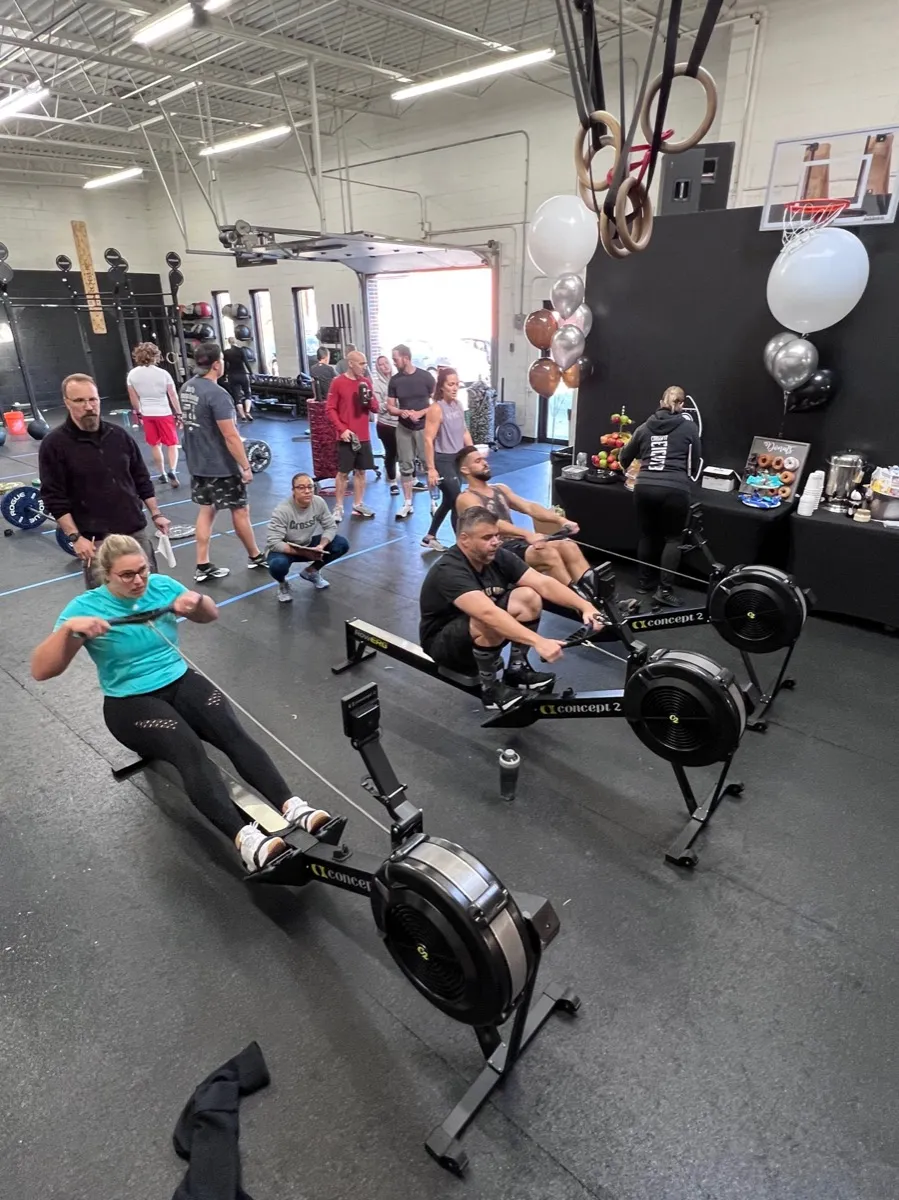
Most people who want to lose weight default to one of two strategies: endless cardio or crash dieting. Sometimes both. And both fail for the same underlying reason -- they ignore muscle.
Cardio-only approaches burn calories during the session, but they don't build muscle. That matters more than most people realize. Muscle is metabolically expensive tissue. It burns calories at rest -- while you're sleeping, sitting at your desk, watching TV. The more muscle you carry, the higher your resting metabolic rate. The less muscle you have, the fewer calories your body needs, and the easier it is to gain fat.
Crash diets are worse. When you dramatically cut calories, your body doesn't just burn fat. It burns muscle too. And when you inevitably go back to eating normally -- because nobody sustains 1,200 calories forever -- you gain the weight back. But here's the cruel part: the weight you regain is mostly fat, not muscle. So now you weigh the same as before, but with less muscle and more fat. Your metabolism is slower. Your body composition is worse. And the next diet will be even harder.
This is the cycle millions of people are stuck in. Diet, lose weight (some fat, some muscle), stop dieting, gain fat back, repeat. Each cycle leaves you with less muscle, more fat, and a slower metabolism. It's a downward spiral disguised as "trying to get healthy."
The solution isn't a better diet. It's a training approach that builds muscle while creating a caloric demand. That changes the equation entirely.
How CrossFit Actually Changes Your Body
CrossFit combines two things that most exercise programs treat as separate: strength training and metabolic conditioning. Every class includes both. You're squatting, pressing, pulling, and lifting heavy things -- building muscle and challenging your skeletal system. And you're doing it at an intensity that drives serious cardiovascular and metabolic adaptation.
This dual effect is what makes it work for body composition. You're not just burning calories during the hour you're in the gym. You're building a body that burns more calories every hour of every day. More muscle means a higher basal metabolic rate. That's not a gimmick. It's basic physiology.
There's another layer too. High-intensity training creates what's called EPOC -- excess post-exercise oxygen consumption. In plain terms: your metabolism stays elevated for hours after an intense workout while your body recovers and repairs. A steady-state jog on a treadmill burns calories while you're jogging. A high-intensity CrossFit session burns calories while you're jogging, and then keeps burning them while you're showering, eating dinner, and sleeping. The total caloric expenditure from a single session extends well beyond the clock.
None of this means CrossFit is magic. It's not. But the combination of strength stimulus plus conditioning stimulus plus metabolic afterburn is a fundamentally more effective approach to changing your body than either cardio or dieting alone.

Body Composition vs. Weight Loss
This distinction matters enough to spend a minute on it.
Weight loss means the number on the scale goes down. That's it. It tells you nothing about what you lost. Water? Muscle? Fat? All three? The scale doesn't know and doesn't care.
Body composition is the ratio of muscle to fat on your frame. Two people can weigh exactly 170 pounds and look completely different. One might be lean and muscular. The other might carry significantly more body fat with less muscle mass. Same weight. Entirely different bodies. Entirely different health profiles.
Muscle is denser than fat. It takes up less space. So when someone starts training and gains five pounds of muscle while losing five pounds of fat, the scale says nothing happened. But their waist is smaller. Their arms have definition. Their face looks different. Their clothes fit differently. Everything changed -- except the number everyone obsesses over.
This is exactly why we offer InBody scans at Moonshot. An InBody scan breaks down your weight into what actually matters: skeletal muscle mass, body fat percentage, water distribution, and segmental analysis. You get real data, not just a number. You can see exactly how much fat you've lost and how much muscle you've gained, even when the scale hasn't moved. That data keeps people from making bad decisions -- like crash dieting because they thought nothing was working.
The Part Nobody Wants to Hear: Nutrition
Training is the stimulus. Nutrition is the environment. You need both.
You cannot out-train a bad diet. It's a cliche because it's true. An hour of intense training might burn 400-600 calories. A large fast-food meal can be 1,500. The math is not in your favor if your nutrition is working against you.
But here's what's interesting about the CrossFit model, and specifically about training in a community: your nutrition tends to improve as a downstream effect. Not because someone hands you a meal plan on day one. Because you start caring about what you eat when you feel the difference in your performance.
When you eat garbage the night before and then try to do a heavy squat session the next morning, you feel it. You feel sluggish, heavy, slow. When you eat well, hydrate properly, and get decent sleep, you feel strong. Your body starts giving you real-time feedback that no diet app can replicate. Over time, you stop eating poorly not because of willpower -- which is a depleting resource -- but because it directly affects something you care about: how you perform.
The community layer amplifies this. When the people around you are talking about protein intake, meal prep, and recovery nutrition, it shifts your baseline. It's not peer pressure. It's environmental design. You become the average of the people you spend time with, and spending time with people who take their health seriously changes your defaults.
For people who need more structured support, Moonshot Medical and Performance is in the same building. They offer medically supervised weight loss programs -- including GLP-1 protocols -- and metabolic blood panels that reveal whether insulin resistance, thyroid issues, or other metabolic dysfunction is working against you. Sometimes the issue isn't discipline -- it's hormonal or metabolic, and no amount of willpower fixes a broken system. Having clinical support alongside your training addresses the full picture.
Why Consistency Beats Intensity
The person who trains three times a week for a year will always outperform the person who goes all-out for six weeks and quits. Always. This isn't even close.
The fitness industry is built on selling intensity. Extreme challenges. 75-day programs. Six-week transformations. And some people do see results during those bursts. Then they stop. The weight comes back. The muscle disappears. They're worse off than when they started because now they also feel like a failure.
The real game is consistency, and consistency is a design problem, not a willpower problem. You need a structure that makes showing up the default. That's where CrossFit's model has a genuine advantage over training alone.
Scheduled classes mean you don't have to decide when to go -- the time is set. Coaches who know your name and your history mean someone notices when you're not there. A community of people who expect you to show up means you feel a pull toward the gym instead of having to push yourself to go. These are structural solutions to the consistency problem, and they work far better than motivation.
We wrote an entire article on gym consistency if you want to go deeper on this. The short version: systems beat willpower. Every time.
What Results Actually Look Like
Let's set honest expectations. No "lose 30 pounds in 30 days" nonsense. Here's what a realistic timeline looks like for someone who starts CrossFit and pairs it with reasonable nutrition:
Month 1
You'll feel better before you look different. Sleep improves. Energy levels stabilize. Your mood shifts. You're sore a lot, and that's normal. The scale probably won't move much. Your body is adapting to a new stimulus -- building neural pathways, learning movement patterns, and laying the groundwork for everything that comes next.
Months 2-3
Clothes start fitting differently. Strength improves noticeably -- weights that felt heavy in week one are now manageable. You start recovering faster between workouts. People who haven't seen you in a while might comment that something looks different. The changes are becoming visible, even if the scale still isn't cooperating.
Months 3-6
This is where things get real. Visible body composition changes. Significant strength gains. Your endurance is markedly better. If you're tracking with InBody scans, you'll likely see measurable drops in body fat percentage and gains in skeletal muscle mass. The people who pair consistent training with solid nutrition see the most dramatic shifts in this window.
6 Months and Beyond
This is no longer a program you're doing. It's how you live. The changes compound. Your capacity keeps growing. You're not just losing fat or gaining muscle anymore -- you're becoming a fundamentally different version of yourself. And because you built it through consistent effort instead of a crash protocol, it sticks.
The timeline varies by person. Genetics, starting point, age, nutrition quality, sleep, stress levels -- all of it plays a role. Anyone who tells you exactly what will happen on exactly what timeline is selling something. What we can tell you is that people who show up consistently and eat reasonably well see meaningful changes. It's not overnight. It's not a 30-day challenge. It's a lifestyle shift that produces compounding results over time.
Getting Started
If you've read this far, you're not looking for a magic pill. You're looking for something that actually works and you can sustain. That's the right starting point.
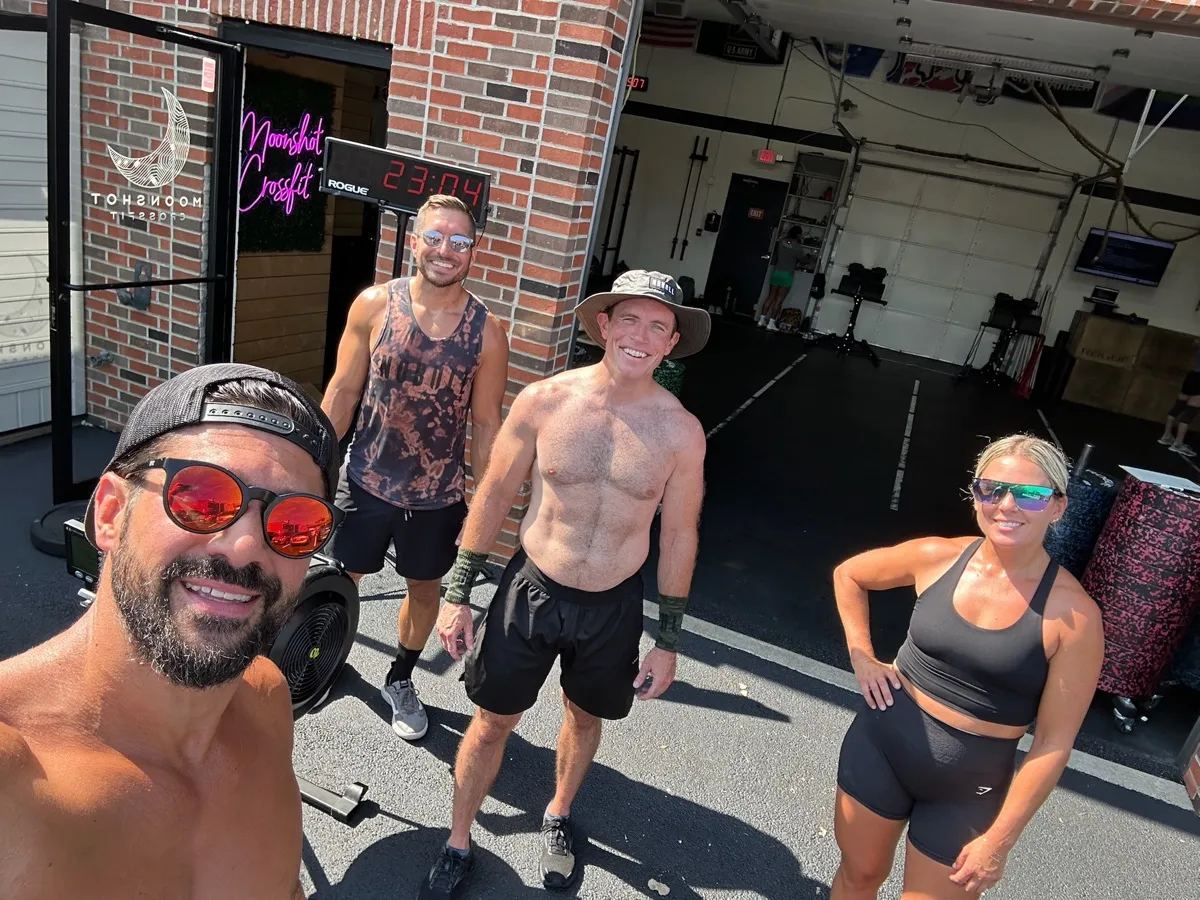
At Moonshot CrossFit, every new member starts with a free one-on-one intro. You'll meet a coach, talk about your goals and your history, and get a complimentary InBody scan to establish a real baseline -- not just a scale number, but actual data on your muscle mass, body fat, and where you're starting from.
No pressure. No hard sell. If it's the right fit, you'll know. If it's not, no hard feelings.
And if hormonal or metabolic issues are part of the picture -- low testosterone, thyroid dysfunction, insulin resistance, or anything else that's making the process harder than it should be -- Moonshot Medical and Performance is in the same building. A comprehensive blood panel can pinpoint exactly what's holding you back, and their clinical team builds a protocol around what the data shows. Training, recovery, and clinical optimization under one roof. That's the Moonshot ecosystem, and it exists because no single intervention fixes everything. Sometimes you need the full picture.
The first step is always the hardest. Everything after that gets easier.