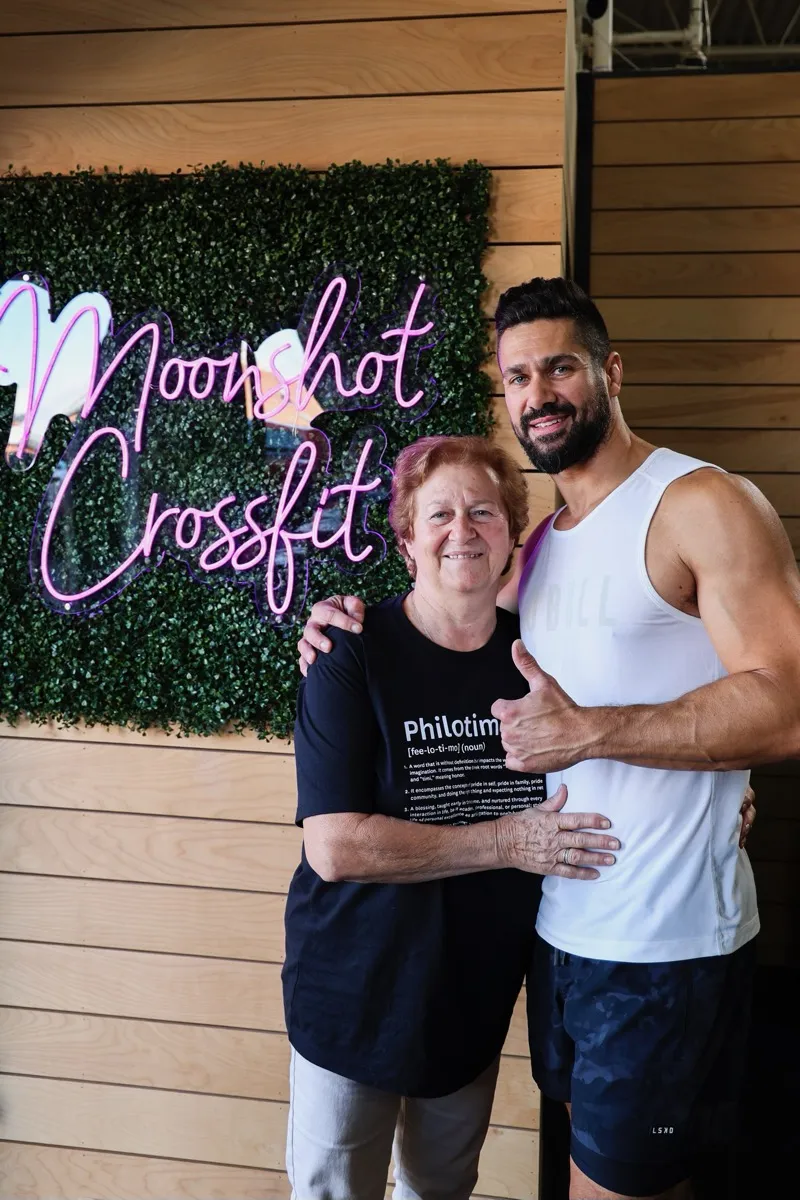
Let's just get this out of the way: you are nervous. That is completely normal. Almost everyone who has ever walked into a CrossFit gym for the first time was nervous. The people who have been coming for three years? They were nervous on day one. The coach who is running the class? Nervous on their first day too.
The nervousness makes sense. You have probably seen CrossFit videos on social media where people are flipping tires, doing muscle-ups, and lifting absurd amounts of weight while looking like they were born in a gym. That is not what your first class looks like. Not even close.
Here is what actually happens.
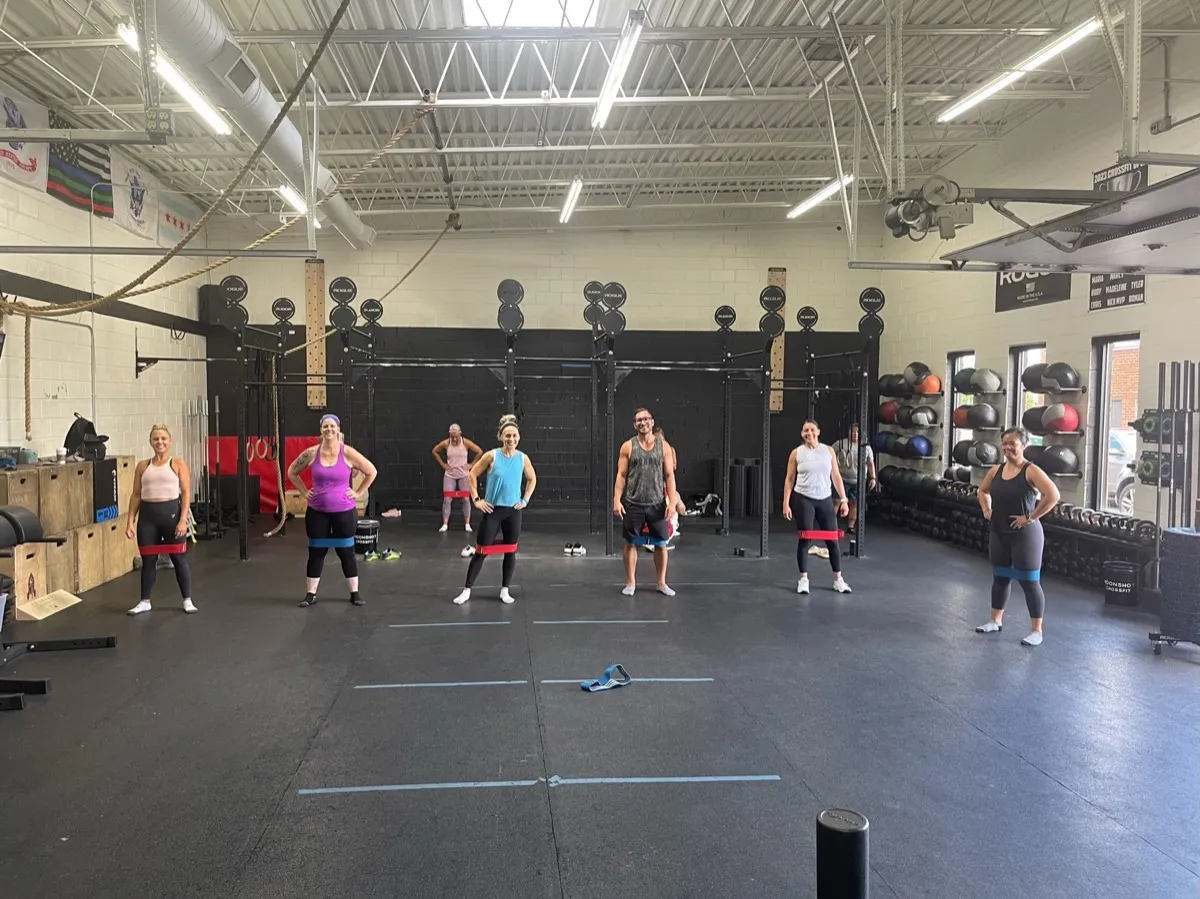
Before You Show Up
You do not need to get in shape before you start CrossFit. Read that again. This is the single biggest misconception, and it keeps people on the sideline for months or years. CrossFit is designed to meet you where you are. That is the entire point.
What to bring: athletic shoes (running shoes are fine), comfortable workout clothes, a water bottle. That is it. You do not need lifting shoes, knee sleeves, or any special gear. Show up as you are.
At Moonshot CrossFit, we actually recommend starting with a free 1-on-1 intro session before jumping into a group class. You will tour the gym, meet a coach, and talk about your goals and any injuries or concerns. It takes the mystery out of the whole thing and makes your first real class feel a lot less daunting.
Walking Through the Door
This is the hardest part. Literally. Walking through the door of a new gym when you do not know anyone and you are not sure what to expect is harder than any workout you will do that day. Once you are inside, everything gets easier.
Here is what you will find: a coach who is expecting you, members who remember being in your shoes, and a general atmosphere that is way more welcoming than the internet would have you believe. CrossFit gyms live and die by their community. Good ones go out of their way to make new people feel comfortable. If a gym does not, find a different gym.
Introduce yourself to the coach. They will take care of the rest.
The Warm-Up
Every class starts with a warm-up. This is not "go jog on the treadmill for five minutes." It is a structured, coach-led warm-up designed to prepare your body for the specific movements in that day's workout. Think: dynamic stretches, mobility drills, light movement patterns, and maybe some easy rowing or biking to get your heart rate up.
The warm-up is also where the coach starts teaching. If the workout includes squats, you will practice squats during the warm-up. The coach will demonstrate the movement, walk you through the key points, and watch you do a few reps to make sure your form is solid before things ramp up.
Learning the Movements
After the warm-up, the coach will break down the strength or skill portion of the class. This might be back squats, deadlifts, overhead presses, or gymnastic movements like pull-ups or push-ups. The coach demonstrates, explains the points of performance, and then you practice.
On your first day, the coach will keep things simple. If the class is doing barbell back squats, you might use an empty barbell or even just a PVC pipe. There is no expectation that you will match the person next to you. Nobody is paying attention to how much weight is on your bar. They are focused on their own workout.
The Workout (WOD)
This is the part that scares people, and it is usually the part that hooks them. The workout of the day, or WOD, is typically 8 to 20 minutes long. It might be a combination of movements: maybe rowing, push-ups, and kettlebell swings. Maybe wall balls, box jumps, and sit-ups. The format changes daily, which is one of the things that keeps CrossFit from getting boring.
Here is the key: everything is scaled.
What Does "Scaling" Mean?
Scaling means adjusting the workout to match your current ability. The workout on the whiteboard might say "21-15-9 thrusters and pull-ups." If you cannot do a pull-up, you do ring rows or banded pull-ups. If the prescribed weight is too heavy, you go lighter. If box jumps are not in your wheelhouse yet, you step up instead of jumping.
Scaling is not cheating. It is smart training. Every single person in the gym started somewhere, and the best athletes in the world still scale workouts when the situation calls for it. A good coach will tell you exactly how to scale each movement before the workout starts so you are never standing there confused.
The goal of the workout is relative intensity, which means working hard for your fitness level. Your hard is different from the person next to you, and that is exactly how it should be.
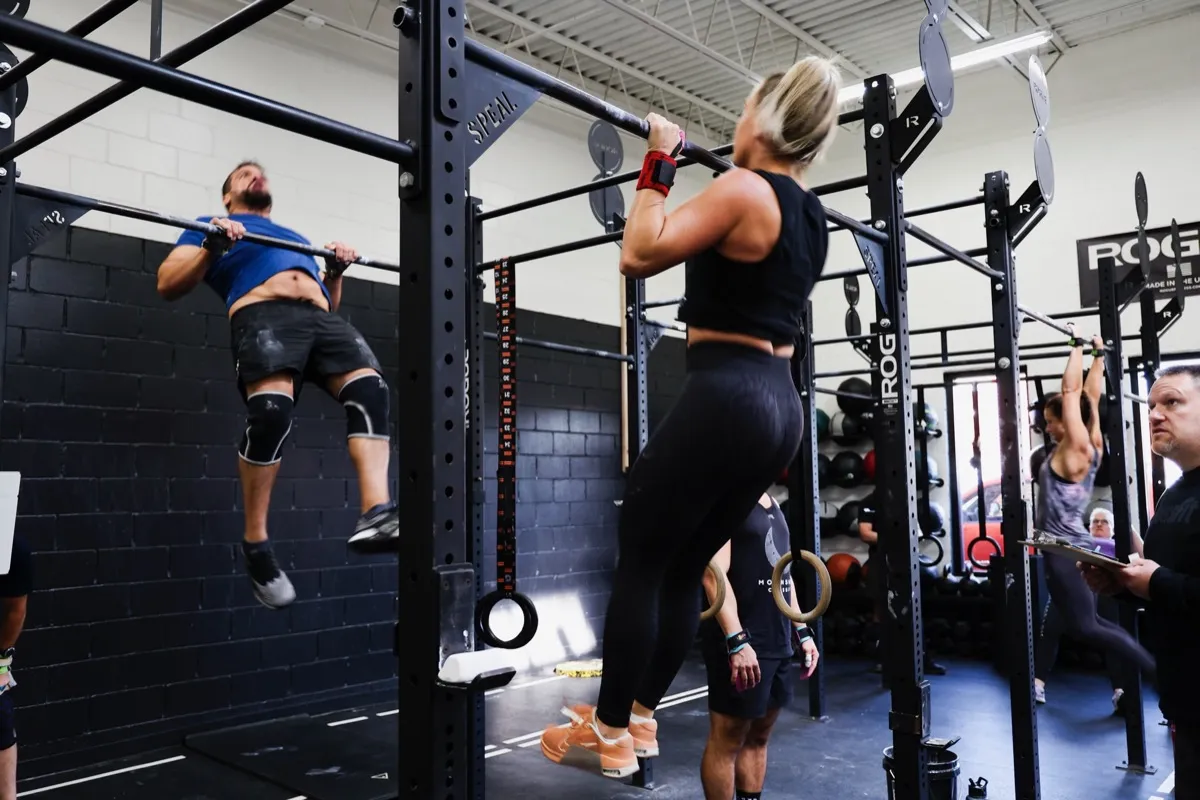
The Cool Down
After the workout, there is usually a cool-down period. Some stretching, some breathing, maybe some foam rolling. This is also when the best conversations happen. People are relaxed, endorphins are flowing, and you will probably get a few "great job" comments from members who noticed it was your first day.
Myths That Keep People Away
Let's kill a few of these.
"I need to get in shape before I start CrossFit."
No. That is like saying you need to get clean before you take a shower. CrossFit is the tool that gets you in shape. Come as you are.
"CrossFit is too intense for me."
The intensity is relative. Your workout is scaled to you. A 55-year-old who has never exercised and a 25-year-old former athlete can do the same class. The movements and loads will just look different.
"Everyone will judge me."
Opposite. The loudest cheers in a CrossFit gym are almost always for the person who finishes last. The community roots for effort, not ability. People will introduce themselves, learn your name, and check in on you next time they see you.
"I'll get hurt."
Injuries can happen in any physical activity, but a well-coached CrossFit class is actually one of the safer environments because you have a coach watching your form in real time. The risk goes up when people skip coaching and ego-lift in a commercial gym with nobody watching. At a gym with good coaches, the priority is always safe movement first.
What Happens After Class
You will be tired. Possibly sore the next day. But you will also feel something you probably have not felt in a while: accomplished. You showed up, you did something hard, and you survived. That feeling is what brings people back.
Most people know within one or two classes whether CrossFit is for them. Not because it is easy, but because it is honest. The workout does not care about your excuses, but the community cares about you.
How Moonshot CrossFit Makes It Easy
At Moonshot CrossFit in Park Ridge, we have designed our onboarding specifically for people who are new. Your free 1-on-1 intro is a low-pressure session where you meet a coach, see the space, and talk through what you are looking for. No workout, no sales pitch. Just a conversation.
From there, you jump into classes with a coach who already knows your name and your background. We scale everything. We have members in their 20s and members in their 60s. Former athletes and people who have not worked out in a decade. The programming is the same. The execution is individualized.
If you want even more personalized attention, we offer 1-on-1 personal training as well. And for people dealing with injuries or pain, we have on-site physical therapy through Moonshot Medical, right in the same building.