At some point after 40, the math changes. You are no longer training to look a certain way or hit a certain number. You are training because you noticed that your back hurts when you pick up your kids. You got winded walking up two flights of stairs. You tweaked something reaching for a dish on a high shelf. Your body is sending you messages, and the message is clear: use it or lose it.
Functional fitness after 40 is not about chasing six-pack abs or setting personal records, although both of those things can still happen. It is about building a body that works. A body that carries groceries from the car without thinking about it. A body that gets down on the floor to play with your grandkids and gets back up without grabbing the couch. A body that stays resilient, mobile, and strong for the next 40 years.
This is not a pipe dream. It is a choice. And it starts with understanding what your body actually needs as it ages.
Why Muscle Mass Is a Longevity Tool
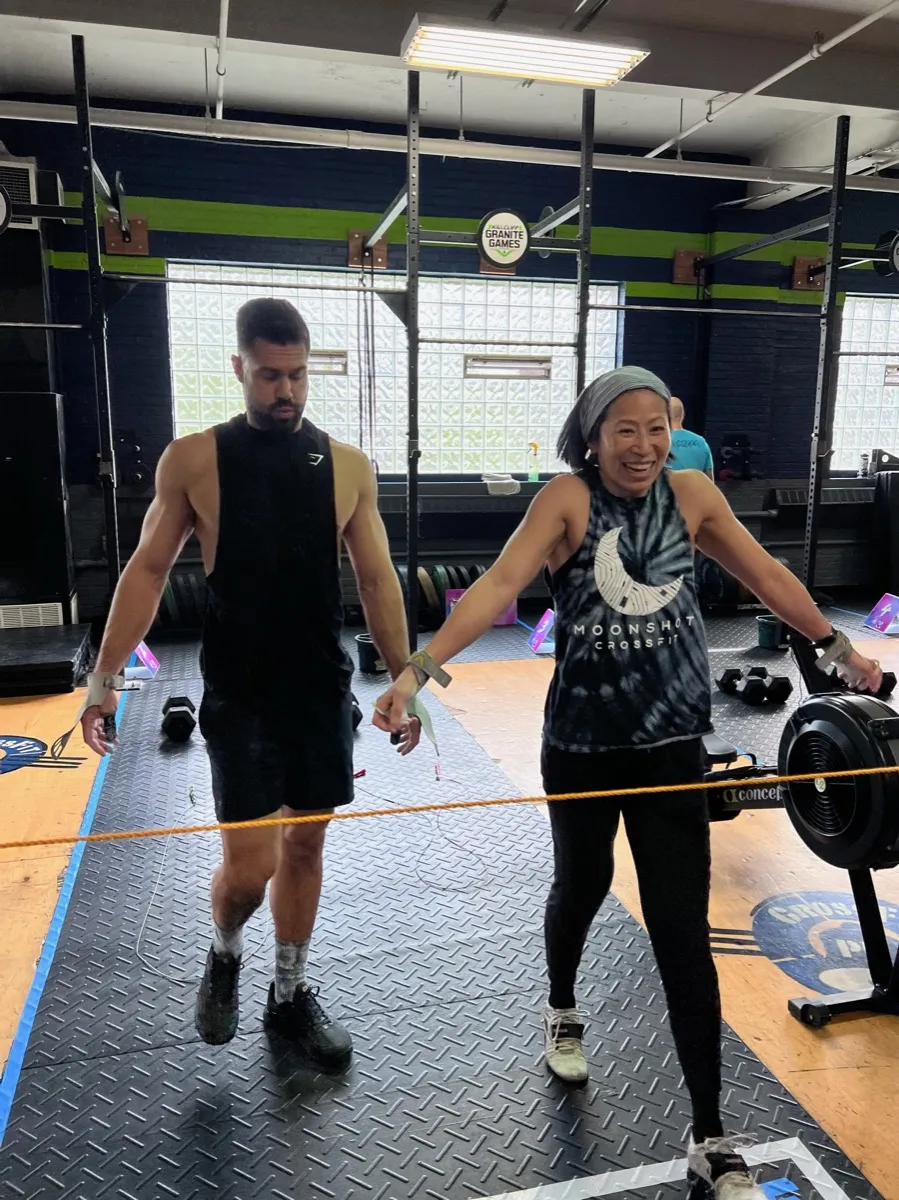
Starting around age 30, you begin losing muscle mass. Without intervention, you can lose 3 to 8 percent per decade, and the rate accelerates after 60. This is called sarcopenia, and it is one of the strongest predictors of frailty, falls, hospitalization, and loss of independence in older adults.
Here is the good news: strength training reverses this. Not slows it down. Reverses it. People in their 50s, 60s, and beyond can build new muscle tissue, increase their strength, and dramatically improve their quality of life through consistent resistance training.
The research is overwhelming. Higher muscle mass is associated with lower all-cause mortality. Translation: people with more muscle live longer, get sick less often, recover faster from surgery, and maintain independence later in life. Muscle is not vanity. Muscle is a longevity tool.
This does not mean you need to become a bodybuilder. It means you need to pick up heavy things on a regular basis. Squats, deadlifts, presses, carries. The foundational movements that build real-world strength. The kind of strength that means you can shovel the driveway at 70 without calling your son-in-law.
Mobility: The Thing Nobody Works On Until It Is Too Late
Strength without mobility is a recipe for injury. And after 40, mobility does not maintain itself. You have to train it.
Mobility is not the same as flexibility. Flexibility is passive range of motion, like how far you can stretch your hamstring. Mobility is active range of motion under control, like being able to squat all the way down with good form and stand back up. It is the ability to move your joints through their full range with strength and stability.
Why does this matter? Because a stiff, immobile body compensates. Your knee hurts because your hip does not move well. Your shoulder aches because your thoracic spine is locked up. Your lower back takes all the stress because your hips and ankles are not doing their job. Pain is usually the last domino, not the first.
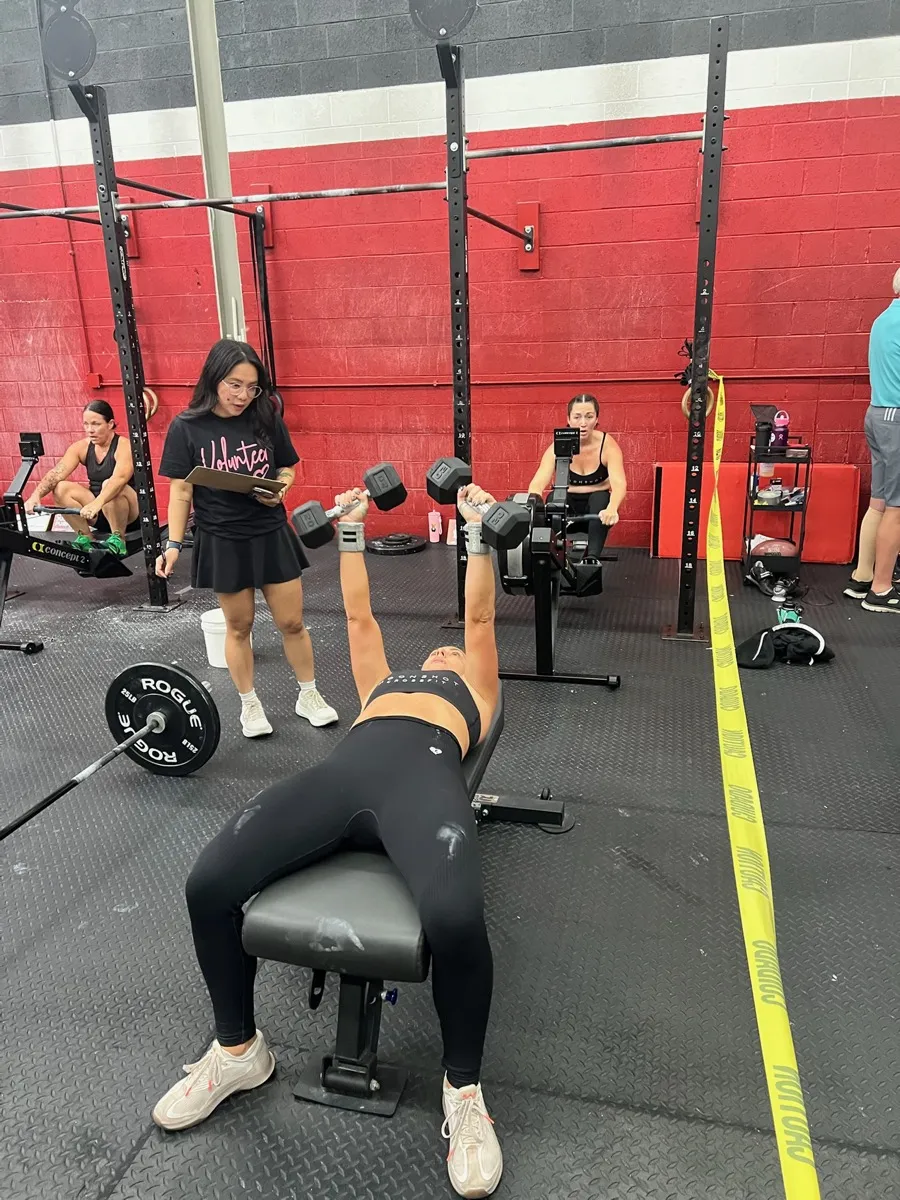
A good training program builds mobility into every session. Warm-ups that open up your hips. Overhead movements that challenge your shoulder range. Squats that take your ankles and hips through full depth. This is one of the things that sets functional fitness apart from a traditional gym routine where you just sit on machines and push in one direction.
Cardiovascular Fitness: Your Heart Does Not Care About Your Biceps
Strength is essential, but it is not everything. Your cardiovascular system needs training too. And the type of cardio matters.
Long, slow cardio like walking and easy biking is good for your baseline health. Everyone should walk more. But if that is all you do, you are leaving a lot on the table. High-intensity interval training, the kind where your heart rate spikes and then recovers, has been shown to improve VO2 max more effectively than steady-state cardio. VO2 max, your body's ability to use oxygen during exercise, is one of the strongest predictors of longevity. Dr. Peter Attia has called it the single most powerful marker for predicting how long you will live.
You do not need to run sprints to get this benefit. Rowing intervals, cycling intervals, or short, intense workouts that combine strength and conditioning all drive VO2 max improvements. This is, coincidentally, what a typical CrossFit workout looks like: a short burst of varied movements at high relative intensity, followed by rest.
Bone Density: The Silent Crisis
Bone density peaks in your 30s and declines from there. For women, the decline accelerates significantly after menopause. Osteoporosis does not announce itself. You do not know your bones are weak until you fall and break a hip. And a broken hip after 65 is not just an inconvenience. It is a life-altering event with serious mortality risk.
The best way to maintain and build bone density? Load-bearing exercise. Specifically, resistance training and impact activities. When you squat with a barbell on your back, your bones respond to the load by getting denser. When you jump on a box, the impact signals your skeletal system to reinforce itself. Walking on a treadmill does not do this. The elliptical does not do this. You need to challenge your bones with load and impact.
This is not reckless. It is preventive medicine. And it is one of the most important things you can do for your long-term health, especially if you are female and over 40.
Balance and Coordination: Preventing the Fall That Changes Everything
Falls are the leading cause of injury-related death in adults over 65. Not car accidents. Not heart attacks. Falls. And the risk of falling is directly tied to your balance, coordination, and reaction time, all of which decline with age unless you actively train them.
Functional fitness addresses this head-on. Single-leg movements like lunges build stability. Dynamic movements like box step-ups train coordination. Varied workout formats challenge your body to adapt and react. This is not something you get from sitting on a leg press machine. It comes from training your body to move in multiple planes, under different loads, at different speeds.
The Deeper Layer: When Training Alone Is Not Enough
Sometimes you are doing everything right. You are training consistently, eating well, sleeping enough. And you still feel stuck. Persistent fatigue. Slow recovery. Weight that will not budge. Low energy that makes you feel 60 when you are 45.
This is where most fitness programs stop. They tell you to train harder or eat less. But the answer might not be in the gym at all. It might be hormonal. It might be metabolic. It might be something that only shows up in bloodwork.
This is why we built the Moonshot ecosystem. At Moonshot CrossFit, we share a building with Moonshot Medical and Performance, a clinic that offers comprehensive lab panels, hormone optimization, and performance medicine. If your testosterone is tanked, no amount of squats will fix it. If your thyroid is off, your energy and metabolism are fighting an uphill battle. If chronic inflammation is running in the background, your recovery will never be what it should be.
Training is the foundation. But for people over 40 who want to optimize, not just maintain, the medical layer is what closes the gap. Labs, data, and clinical guidance, combined with the coaching and community you get in the gym.
What This Looks Like in Practice
You do not need a complicated plan. You need a consistent one. Here is what matters after 40:
Strength Training
3 to 4 days per week. Compound movements like squats, deadlifts, presses, and pulls. Progressive overload over time. This is non-negotiable.
Conditioning
2 to 3 days per week of mixed-intensity cardiovascular work. Some longer, easier efforts. Some short, high-intensity intervals. Variety matters.
Mobility Work
Daily. Even five minutes of targeted mobility work makes a difference. Hips, shoulders, thoracic spine, and ankles are the priority areas.
Recovery
Sleep 7 to 8 hours. Manage stress. Address injuries early instead of training through them. Physical therapy is not a sign of weakness. It is maintenance.
Notice what is not on the list: six days a week of crushing yourself into the ground. More is not always better after 40. Smarter is better. Consistency beats intensity every time.
Why CrossFit Works for This
CrossFit, done well, checks every box on the list above. Strength training? Every week. Conditioning? Every class. Mobility? Built into the warm-up. Variety? Daily. Coaching? In real time, watching your form and adjusting your loads.
The programming at a good CrossFit gym like Moonshot CrossFit is designed to be scalable for all levels. That means a 42-year-old who has not worked out in five years and a 28-year-old competitive athlete can do the same class. The movements are the same. The loads and intensity are individualized.
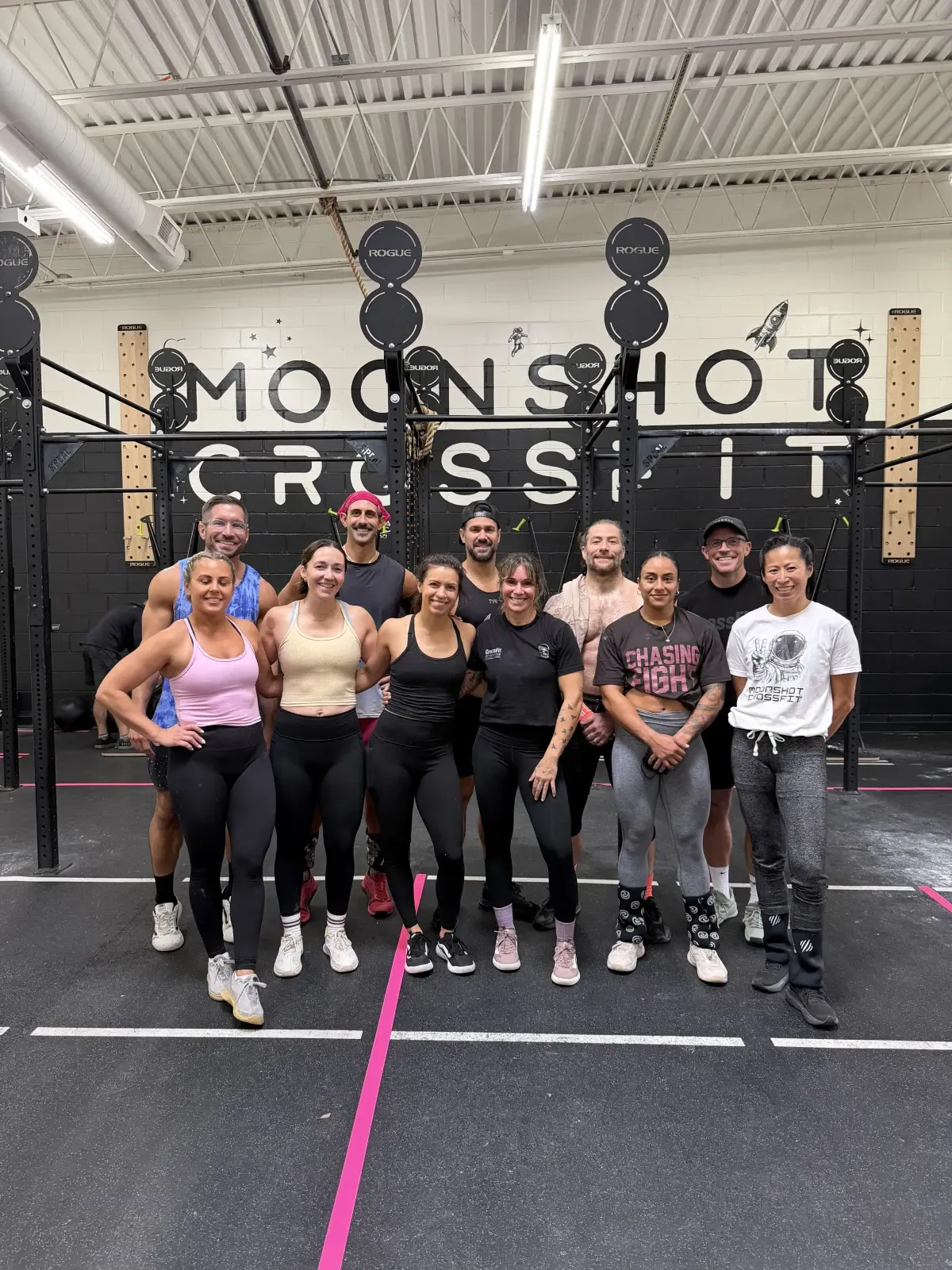
And the community matters more than you think. Research consistently shows that social connection and accountability are two of the biggest predictors of long-term exercise adherence. The people who show up to the gym are not just training partners. They are the reason you do not skip when you are tired, busy, or not feeling it.
The Best Time to Start Was 10 Years Ago. The Second Best Time Is Today.
You are not too old. You are not too out of shape. You are not too far gone. Every year you wait, the hill gets steeper. But the body is remarkably adaptable at any age. People in their 40s, 50s, 60s, and beyond gain strength, build muscle, improve their cardiovascular health, and transform how they feel every single day.
The only thing standing between you and a stronger, more capable version of yourself is the decision to start. And the willingness to keep showing up.