You have been dealing with it for months. Maybe longer. That shoulder that flares up every time you go overhead. The patellar tendon that aches during wall balls and will not calm down. The elbow that makes you dread pulling movements. You have done the PT. You have scaled. You have rested. And it is better -- but it is not gone. You are training around it instead of through it, and you are starting to wonder if this is just how it is now.
It does not have to be. There is a category of recovery tools that most CrossFit athletes have heard whispers about but never gotten a straight answer on: peptides. Specifically, BPC-157, TB-500, and the combination known as the Wolverine Blend. This is the straight answer.
Why CrossFit Athletes Get Stuck With Lingering Injuries
CrossFit is uniquely demanding on connective tissue. It is not just the load -- it is the combination of load, volume, and variety. In a single week you might snatch heavy, do 100 pull-ups across a workout, run 5K, and hit a 20-minute AMRAP with wall balls and box jumps. That combination targets tendons, ligaments, and muscle tissue from every angle.
The movements that define CrossFit -- olympic lifting, gymnastics, and high-rep metabolic conditioning -- put specific stress on structures that heal slowly. Tendons and ligaments have limited blood supply compared to muscle. They repair at a fraction of the rate. So while your muscles recover between sessions, your connective tissue accumulates microtrauma faster than it can repair.
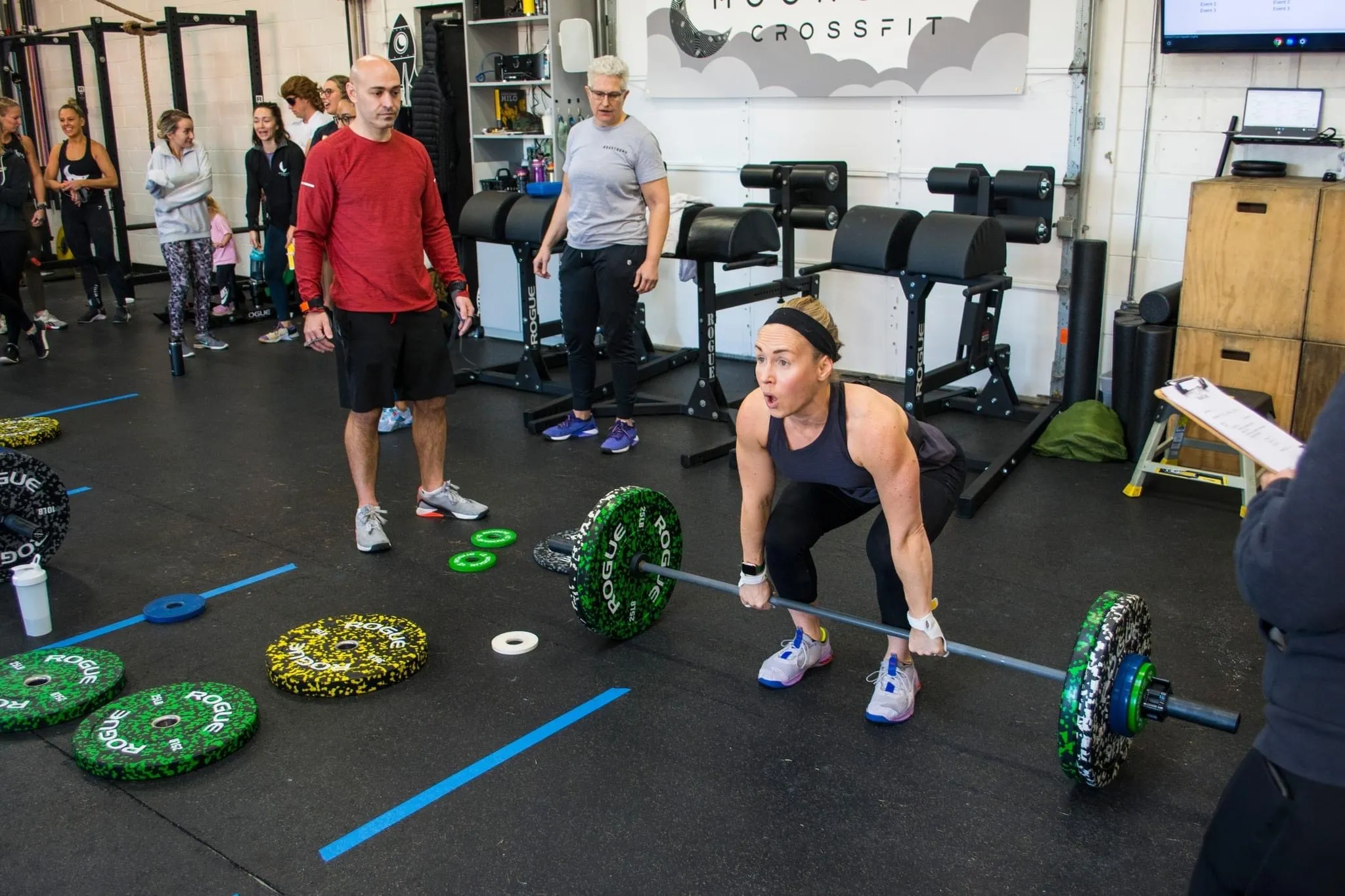
The most common lingering injuries in CrossFit athletes are predictable:
Rotator Cuff Tendinopathy
Overhead pressing, snatches, kipping pull-ups, handstand push-ups. The shoulder complex takes more abuse in CrossFit than arguably any other sport. When the rotator cuff tendons become irritated or partially damaged, overhead work becomes painful and limited.
Patellar Tendinitis
Wall balls, box jumps, heavy squats, lunges, pistols. The patellar tendon absorbs tremendous forces during explosive knee extension. Chronic irritation leads to pain at the front of the knee that worsens under load.
Elbow Tendinopathy
Pull-ups, muscle-ups, heavy cleans, barbell cycling. Both medial and lateral epicondylitis are common in CrossFit. Grip-intensive movements and repetitive elbow flexion and extension under load are the primary drivers.
Chronic Shoulder Impingement
High-volume overhead work without adequate mobility or scapular stability creates a pattern of impingement that flares with certain movements and never fully resolves.
Physical therapy addresses the movement patterns, strength imbalances, and mobility restrictions that contribute to these injuries. It works. But for some athletes, PT alone brings them to 70-80% recovery and then plateaus. The tissue itself -- the collagen, the blood supply, the cellular repair machinery -- needs additional support to complete the job.
That is where peptides come in.
What Peptides Actually Are
Peptides are short chains of amino acids -- smaller than proteins, but with specific biological signaling functions. Your body produces thousands of them naturally. They act as messengers, telling cells what to do: grow, repair, reduce inflammation, build new blood vessels.
Therapeutic peptides are synthetic versions of these natural compounds, designed to amplify specific repair and recovery signals. They are not steroids. They do not build muscle directly. They do not give you supraphysiological anything. What they do is accelerate the body's own healing processes -- particularly in tissues that heal slowly on their own.
For a deeper dive into the science, Moonshot Medical's peptide guide covers the mechanisms in detail. Here is the athlete-specific breakdown.
BPC-157: The Tendon and Ligament Healer
BPC-157 (Body Protection Compound-157) is a synthetic peptide derived from a protein found in gastric juice. It was originally studied for gut healing, but research has shown it has broad tissue-repair properties that make it particularly relevant for athletes.
Angiogenesis
BPC-157 promotes the formation of new blood vessels in damaged tissue. This is critical for tendons and ligaments, which have notoriously poor blood supply. More blood flow means more oxygen, more nutrients, and faster repair at the cellular level.
Collagen Production
It upregulates growth factors involved in collagen synthesis -- the structural protein that tendons and ligaments are made of. This is not just faster healing; it is better quality tissue repair.
Anti-Inflammatory Signaling
BPC-157 modulates the inflammatory response -- not suppressing it entirely (you need some inflammation for healing) but steering it toward resolution rather than chronic cycling.
Gut Protection
A relevant bonus for athletes: BPC-157 protects the gut lining. If you have been popping ibuprofen to manage training-related pain (most CrossFit athletes have at some point), your gut lining has taken damage. BPC-157 helps repair that too.
For athletes dealing with tendinopathy -- rotator cuff, patellar, Achilles, elbow -- BPC-157 targets the exact bottleneck that keeps these injuries from resolving: insufficient blood supply and slow collagen turnover in the damaged tissue.
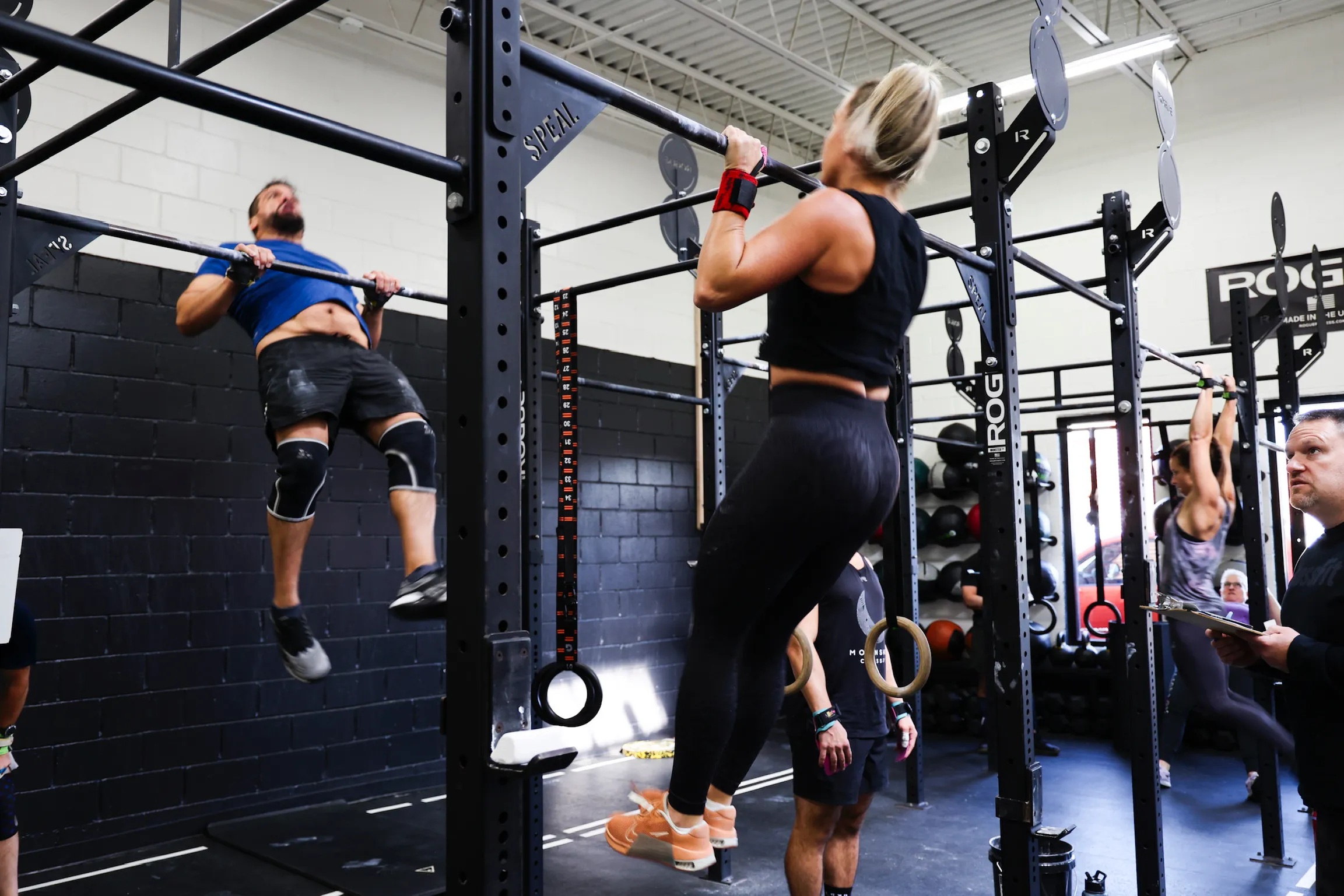
TB-500: The Muscle Repair Accelerator
TB-500 is a synthetic version of thymosin beta-4, a naturally occurring peptide that plays a central role in tissue repair and cell migration. Where BPC-157 excels at tendon and ligament healing, TB-500 brings a complementary set of mechanisms focused on muscle recovery and systemic inflammation.
Actin upregulation. TB-500's primary mechanism is upregulating actin, a protein essential for cell structure, movement, and repair. Actin is involved in the migration of cells to injury sites and the formation of new tissue. More actin activity means faster mobilization of repair cells to damaged muscle fibers.
Reduced inflammation. TB-500 has potent anti-inflammatory properties that go beyond the local injury site. For CrossFit athletes dealing with systemic inflammation from chronic high-intensity training, this has a compounding benefit -- it does not just help the specific injury, it reduces the overall inflammatory load that slows recovery across the board.
Cell migration and differentiation. TB-500 promotes the migration of endothelial cells and keratinocytes to damaged areas, accelerating the formation of new blood vessels and tissue. This is particularly relevant for muscle strains, tears, and the general microtrauma that accumulates from high-volume training.
The Wolverine Blend: Dual-Pathway Recovery
The name is earned. The Wolverine Blend combines BPC-157 and TB-500 into a single protocol, hitting tissue repair from two different biological pathways simultaneously.
Think of it this way: BPC-157 focuses on building new blood vessels and stimulating collagen production in the damaged tendon or ligament. TB-500 mobilizes repair cells and reduces the systemic inflammation that slows down the entire healing process. Together, they create an environment where the body can actually complete repairs that it has been struggling to finish on its own.
For CrossFit athletes, the Wolverine Blend is particularly relevant when:
- You have multiple injury sites (shoulder and knee, elbow and shoulder)
- The injury involves both tendon/ligament damage and muscle strain
- You have been dealing with chronic inflammation from training volume
- PT has brought you to a plateau and you need to push past it
Not a Replacement for PT -- A Complement to It
This needs to be stated clearly: peptides do not replace physical therapy, movement correction, or smart programming. If your rotator cuff tendinopathy is caused by poor scapular mechanics and you inject peptides without fixing the mechanics, the tissue will heal and then get re-injured because the root cause is still there.
The best outcomes happen when peptides are layered on top of a solid rehabilitation foundation. Fix the movement. Address the strength deficit. Manage the training load. And then use peptides to accelerate the tissue repair that would otherwise take months longer.
At Moonshot, this integration happens naturally. Your coach understands what you are rehabbing. Your PT addresses the movement dysfunction. And the medical team at Moonshot Medical handles the peptide protocol. All three are connected, all under one roof. That is not how most athletes experience recovery -- but it is how it should work.
Pharmaceutical-Grade, Not Internet Research Chemicals
This is the part that matters more than most people realize. There is a significant difference between peptides prescribed by a licensed medical provider and sourced from a 503A compounding pharmacy versus peptides ordered from a website that sells "research chemicals" with a disclaimer that says "not for human use."
Pharmaceutical-grade peptides from licensed 503A pharmacies are:
- Produced under strict compounding standards with verified purity
- Prescribed by a licensed clinician who evaluates your medical history
- Dosed based on your body weight, injury profile, and clinical goals
- Monitored throughout the protocol with follow-up and adjustments
Research chemicals from unregulated online vendors have none of these safeguards. You do not know what is in them. You do not know the purity. You do not know the dosage accuracy. And you have no clinical oversight if something goes wrong. For a compound you are injecting into your body, that gap is not trivial.
What It Costs and How It Works
Peptide therapy at Moonshot Medical starts with a medical consultation. A clinician evaluates your injury history, current symptoms, training load, and medical background to determine whether peptides are appropriate and which protocol makes sense for you.
Pricing
Protocols typically run 4-12 weeks depending on the injury. Most athletes start noticing improvements in pain and function within the first 2-4 weeks. Significant tissue remodeling continues over the full course.
Moonshot Medical is located at 542 Busse Hwy in Park Ridge -- the same building as Moonshot CrossFit. You can literally walk from your workout to your consultation. No separate appointment across town. No disconnect between your training and your medical care.
The Bottom Line
CrossFit demands a lot from your body. When your body falls behind on repairs -- when tendons, ligaments, and muscle tissue cannot keep up with the training stimulus -- injuries linger. PT addresses the movement side. Peptides address the tissue repair side. Combined, they give your body what it needs to actually finish healing instead of hovering at 80% indefinitely.
If you have been training around an injury for months, if PT brought you most of the way but not all the way, if you are tired of modifying every workout because something still hurts -- peptide therapy is worth investigating. Not as a magic bullet. Not as a shortcut. As a targeted intervention that accelerates what your body is already trying to do.
The first step is a conversation. Book a consultation at Moonshot Medical and find out whether peptides make sense for your situation. It is the same building. It takes 30 minutes. And it might be the thing that gets you back to training at 100%.
Frequently Asked Questions
Are peptides like BPC-157 and TB-500 legal?
Yes. BPC-157 and TB-500 are legal when prescribed by a licensed medical provider and compounded by a licensed 503A pharmacy. They are not FDA-approved drugs, but they are legally prescribed as compounded medications under physician supervision. What is not legal -- and not safe -- is buying "research chemical" peptides from unregulated online sources.
How long does it take for peptides to work for tendon injuries?
Most patients begin noticing improvements in pain and function within 2-4 weeks. Significant tissue remodeling typically occurs over 6-12 weeks. Chronic injuries that have been present for months or years generally take longer. Combining peptides with physical therapy and appropriate training modifications produces the best outcomes.
Can I keep training CrossFit while on peptide therapy?
In most cases, yes. One of the advantages of peptide therapy is that it supports healing while you continue to train. Your clinician will advise on any movement modifications based on your specific injury. Many athletes continue training at 80-90% capacity, scaling or substituting movements that aggravate the injury.
What is the difference between BPC-157 and the Wolverine Blend?
BPC-157 is a single peptide that primarily targets tendon, ligament, and gut healing through angiogenesis and growth factor modulation. The Wolverine Blend combines BPC-157 with TB-500, adding a second recovery pathway -- TB-500 upregulates actin for muscle repair and has broader anti-inflammatory effects. The combination hits tissue repair from two angles simultaneously.
Are peptides banned in CrossFit competitions?
TB-500 is on the WADA prohibited list and would be banned in sanctioned competitions that follow WADA testing protocols, such as the CrossFit Games. BPC-157 is not currently on the WADA prohibited list. If you compete at the sanctioned level, discuss this with your clinician before starting any protocol. For recreational CrossFit athletes, this is not a concern.