You know you should work out. You're not lazy. You're just running a logistics operation called parenting — school drop-offs, soccer practice, piano lessons, homework, dinner, bedtime — and by the time the kids are asleep, the couch wins. Every time.
Sound familiar? You're not alone. This is the number one thing we hear from parents in Park Ridge. Not "I don't want to work out." It's "I literally cannot figure out when or how." The desire is there. The bandwidth isn't.
This post is for you. Not a pep talk. Not a guilt trip. A practical breakdown of how parents in Park Ridge are actually making fitness work around their families — and how you can too.
The Real Problem Isn't Time
Let's be honest. You have one hour. Somewhere in your week, you have one hour — probably several of them. The issue isn't time. It's decision fatigue.
By the time you figure out what to do, when to do it, and where to go, the window has closed. You spend ten minutes debating whether today is a running day or a lifting day, another five looking up a workout on YouTube, another three wondering if you have the right equipment, and then your kid needs a snack and the moment is gone.
The fix isn't more motivation. Motivation is a terrible strategy for busy parents because it evaporates the second something more urgent shows up — and with kids, something more urgent always shows up.
The fix is removing the decisions. You need a gym where you show up, someone tells you what to do, you do it, and you leave. One hour. That's it. No programming, no planning, no thinking. Just execution.
The Parent-Friendly Gym Checklist
Not every gym is built for parents. Most aren't. Here's what to look for if you're a mom or dad in Park Ridge trying to find something that actually fits your life:
- A schedule with early morning AND mid-morning options. The 5:30 AM class lets you train before the kids wake up. The 9:30 AM class lets you drop kids at school and come straight to the gym. If a gym only offers evening classes, it's not designed for your life.
- One-hour classes, max. Get in, get out, get on with your day. If a workout takes 90 minutes plus drive time, it's not sustainable for a parent. Period.
- Coaching. You don't have time to research and program your own workouts. You need a coach who writes the programming, runs the class, and makes sure you're moving safely. Show up, follow the plan, go home.
- A community of other parents. When the people around you get it — when they're also juggling school pickups and bedtime routines — you actually look forward to going. It becomes your hour, not another obligation.
- Programs for your kids too. If your kids can train at the same place you do, fitness stops being something that competes with family time and starts being something the whole family does together.
How Park Ridge Parents Make It Work
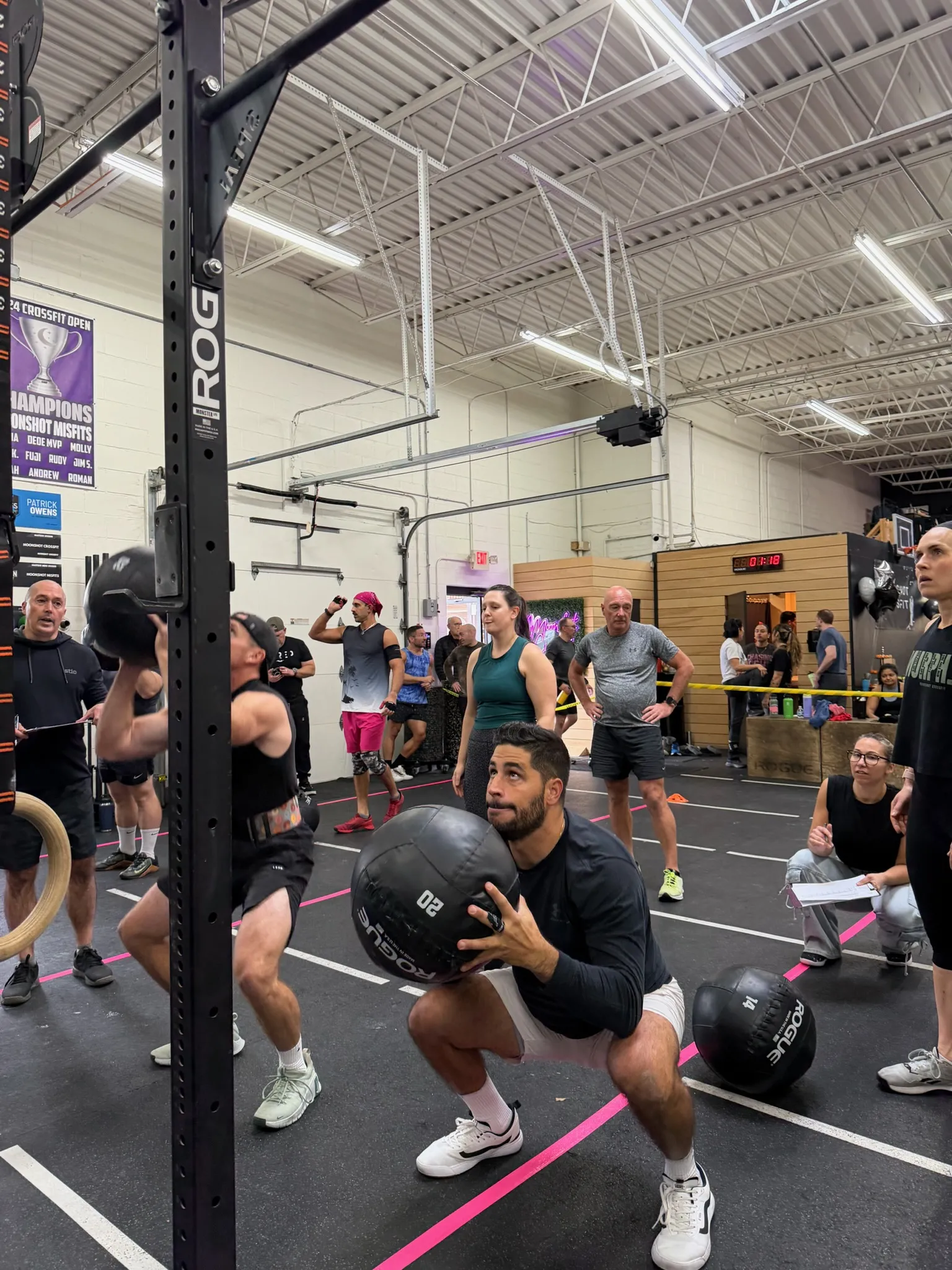
We've been doing this long enough to see the patterns. Here's how parents at Moonshot CrossFit actually build fitness into their schedules:
The 5:30 AM crew. These are the parents who get it done before the house wakes up. Alarm goes off, gym clothes are already laid out, they're at Moonshot by 5:25, training by 5:30, home by 6:45 — showered and ready before the kids even know they were gone. It sounds brutal, but every single one of them will tell you the same thing: it's the best hour of their day, and it sets the tone for everything that comes after.
The 9:30 AM crew. Stay-at-home parents, remote workers, and anyone with a flexible morning. They drop kids at school, come straight to the gym, train, and still have the rest of the morning ahead of them. This is one of the most popular time slots at Moonshot for exactly this reason.
The evening crew. Parents who trade off with a spouse. "You go Monday and Wednesday, I'll go Tuesday and Thursday." It works because it's structured — both people get their time, and nobody has to negotiate every single week.
Saturday mornings. This is when the whole family shows up. A parent hits the 8 AM or 9 AM class while the kids do their own program. It's become a Saturday morning ritual for a lot of Moonshot families — and the kids love it as much as the parents do.
The Whole Family Gets In on It
One of the things that makes this work long-term is that fitness doesn't have to be a solo activity that takes you away from your family. At Moonshot, we run kids programs for ages 5-12 and teen athlete training for middle and high schoolers. Your kid isn't just "entertained" while you work out — they're developing real fitness habits, learning how to move well, and building confidence in their own right.
When your kids see you prioritizing your health — and they're doing the same — it changes the family dynamic. Fitness becomes a shared value, not a competing priority.
For new and expecting parents, we also have specific resources. Coach Sarah runs our prenatal training program, and we've put together a detailed guide on returning to training postpartum. Whether you're pregnant, six weeks postpartum, or chasing a toddler around the house, there's a path here for you.
Beyond Just the Workout
Here's what most parents don't realize until they're inside it: the gym becomes more than a place to exercise. It becomes your outlet, your social time, and your support system.
But there's also a practical side. If your back hurts from carrying a 30-pound toddler on one hip all day (it will), we have on-site physical therapy through Moonshot Medical. If you want to see real, measurable progress beyond the scale, we offer InBody body composition scans that show you exactly what's changing — muscle gained, fat lost, none of the guesswork.
The whole ecosystem is built to support the person, not just the athlete. Because for most parents, fitness isn't about competing or hitting PRs. It's about having the energy to keep up with your kids, feeling good in your body, and not being wrecked by 3 PM every day.
The Bottom Line
You don't need more time. You need a system. One hour, three days a week, at a gym that handles the thinking for you. That's the formula. Not complicated. Not glamorous. Just effective.
Pick a schedule. Pick a gym that fits your life — not the other way around. Show up, follow the coach, and leave feeling better than when you walked in. Do that consistently, and everything else starts to improve: your energy, your sleep, your patience, your mood.
And here's the part nobody talks about enough: your kids are watching. They're learning what it means to take care of yourself, to prioritize health, to show up even when it's not convenient. You modeling that behavior is one of the most valuable things you can give them. More than any lecture. More than any screen-time rule. They see you doing it, and it sticks.
You don't have to figure this out alone. Start with one class. See how it feels. Go from there.